Asynchronous healthcare
Redefining the traditional healthcare model by embracing an asynchronous care model to boost clinician productivity and patient flexibility.
Introduction
In May 2021, I joined Reset Health as founding product designer and worked on the 0-1 product build of the Roczen platform — consisting of a clinician-facing web app and patient-facing mobile app.
Challenge
As patients, finding time for a health check-up is hard — too much time on hold and in waiting rooms.
As clinicians, 90% of the day is spent seeing the same conditions and repeating the same things — with patients not even showing up on top of it all.
Solution
Whilst most industries redefined remote working during the pandemic, healthcare simply replicated the physical environment virtually.
We spotted the drawbacks of synchronous care early and set out to build something fundamentally different.
We redefined the traditional care model to boost clinician productivity — and saw a direct increase in patient engagement and retention as a result.
Redefining the care model
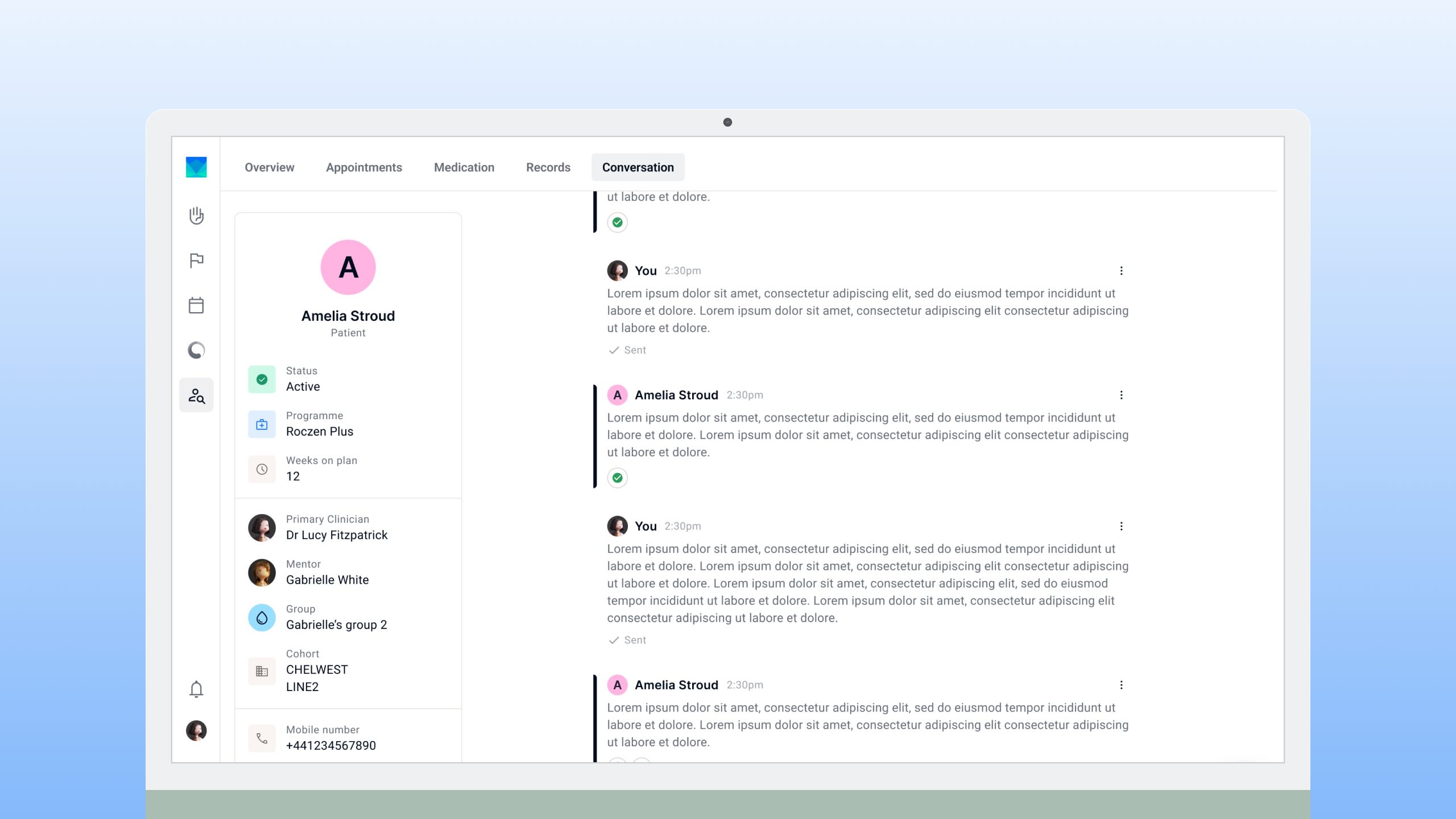
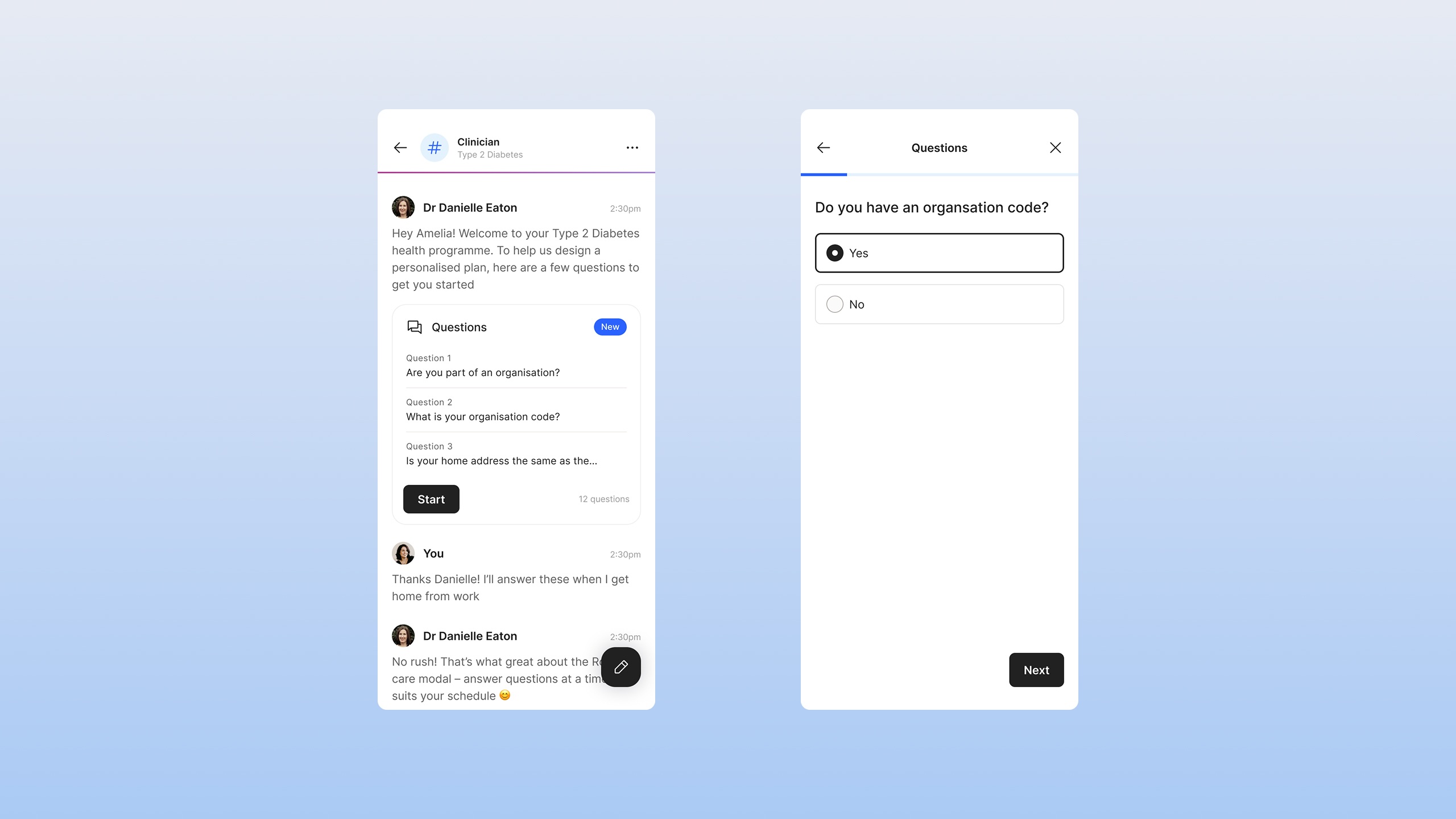
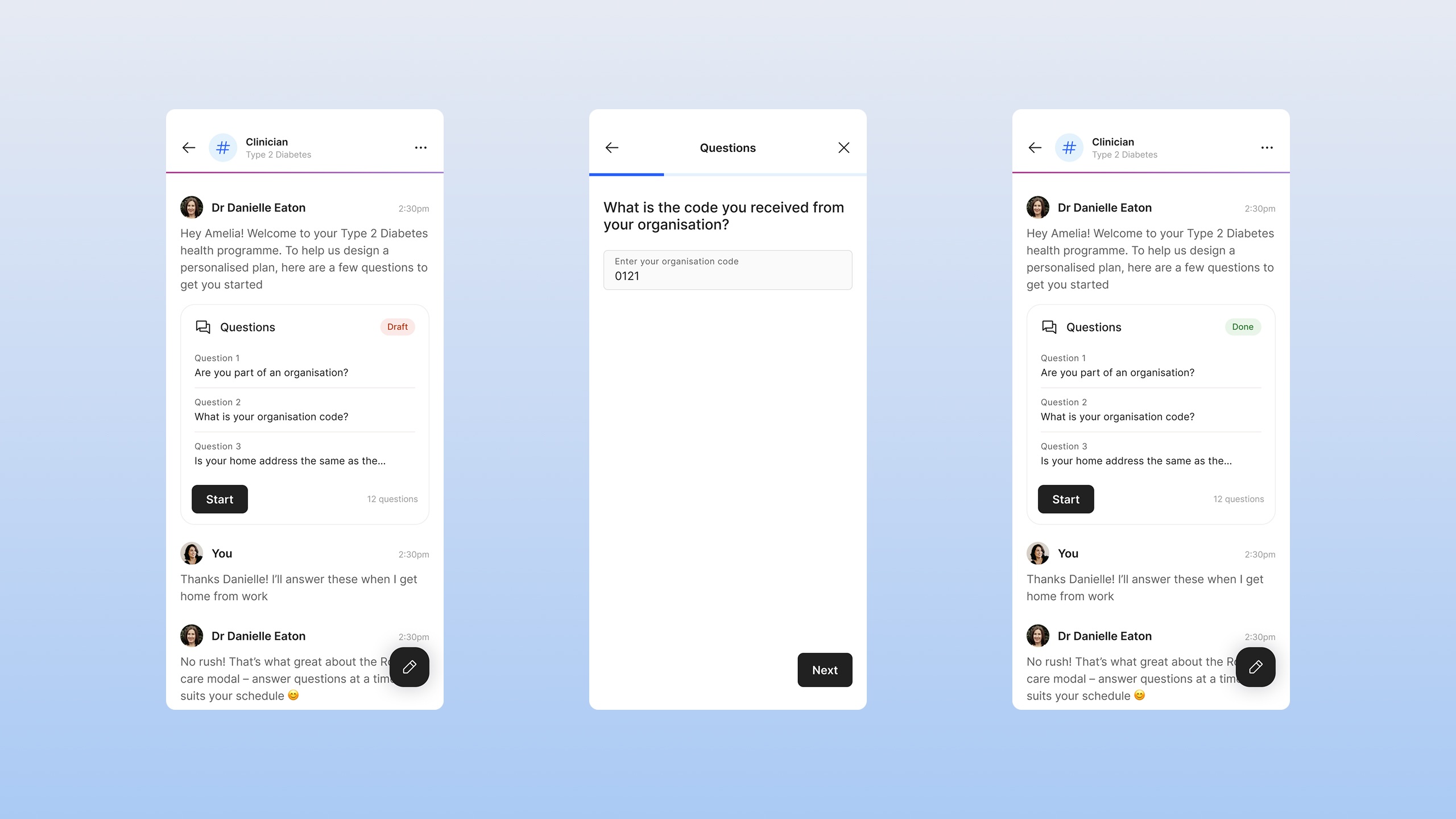
Roczen was designed to solve the pitfalls of virtual appointments post-pandemic — a fully asynchronous care model built on structured questionnaires and 24/7 messaging between patients, clinicians and coaches.
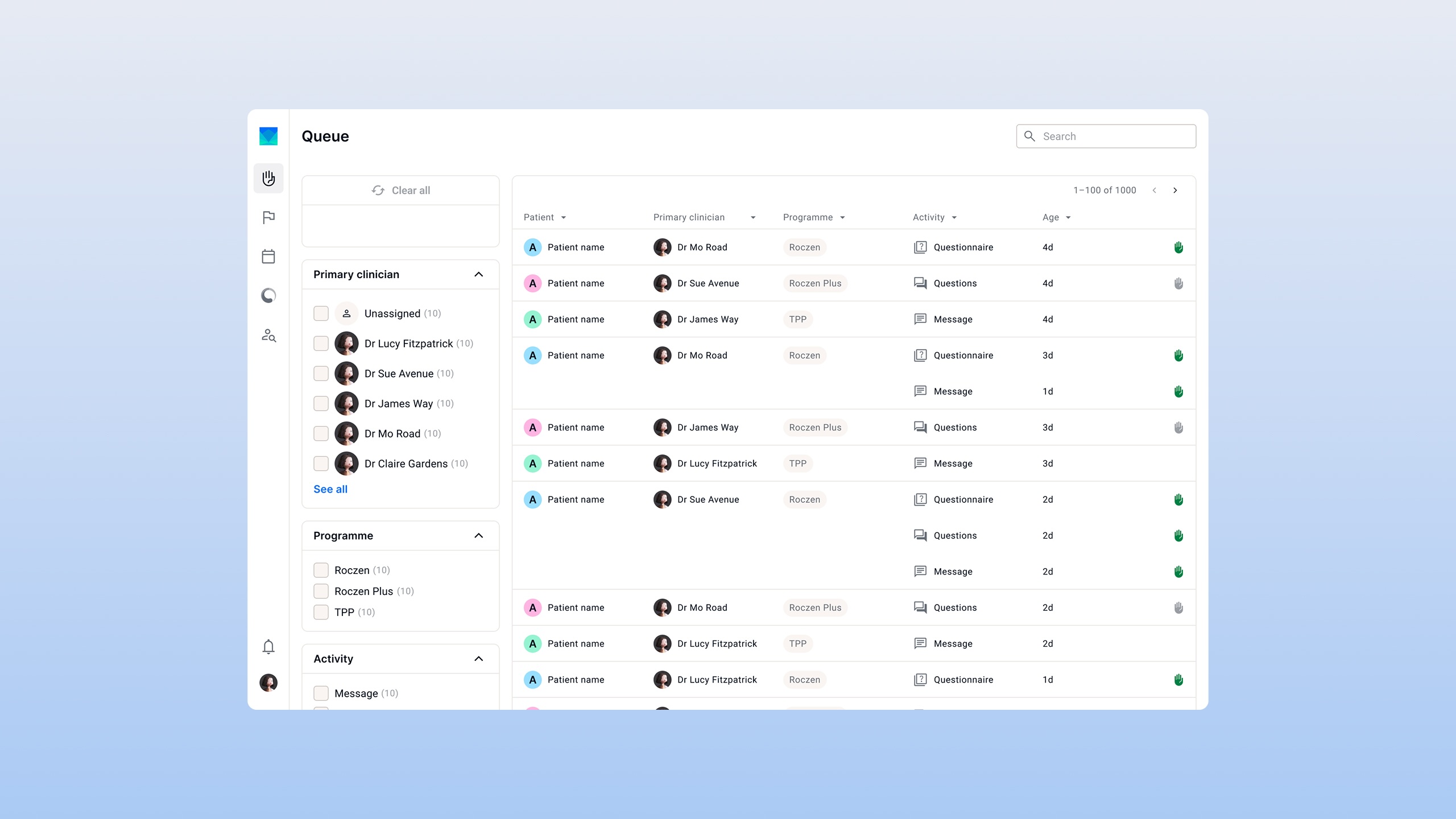
Queue
The asynchronous model needed a single view of all patient activity. Enter the Queue — an inbox-like feature letting clinicians see every message, questionnaire and submission from patients.
Inspired by project management tools like Jira and Asana, activity could be assigned to a clinician and marked as resolved when complete.
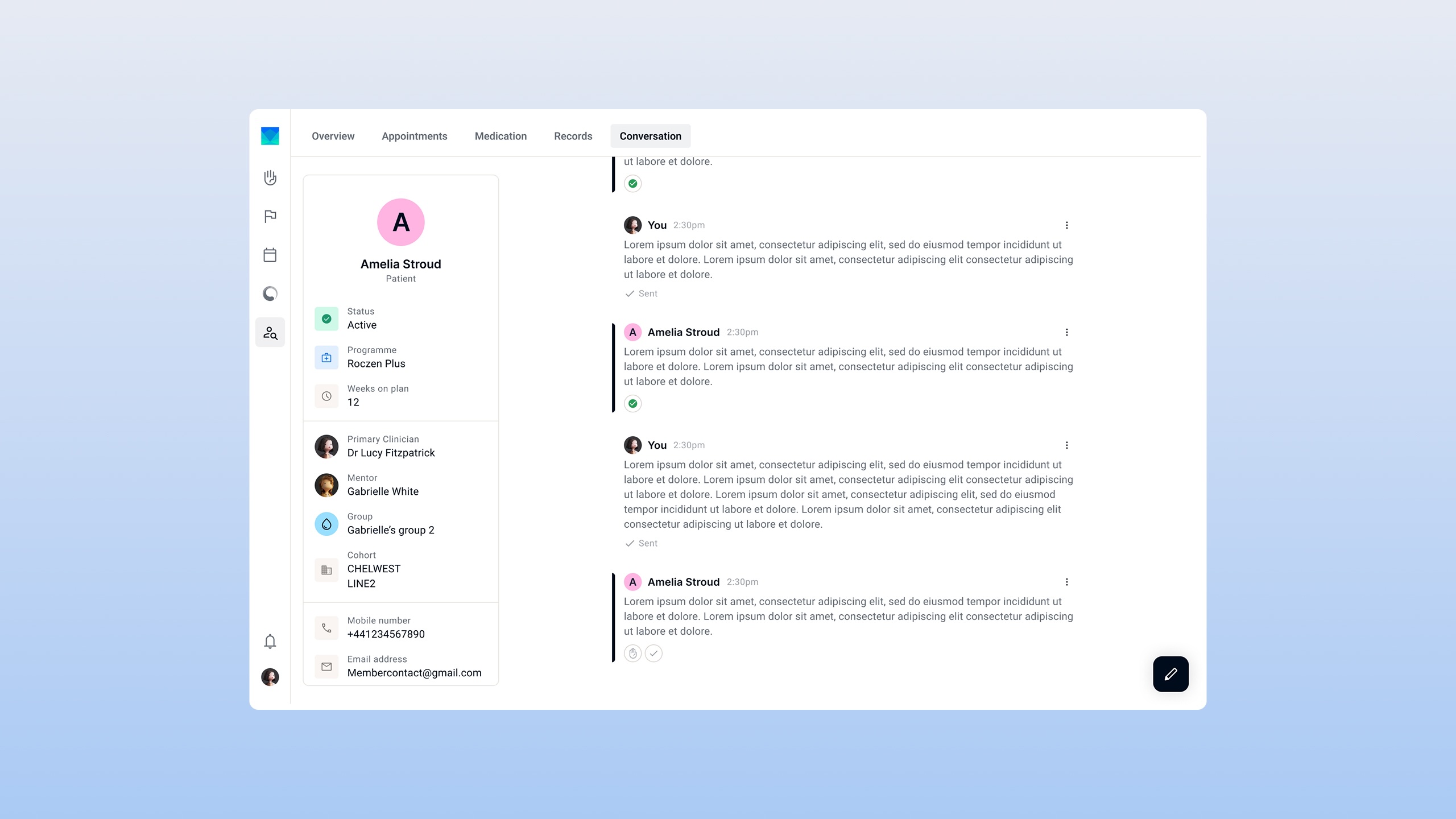
Search, sort & filter
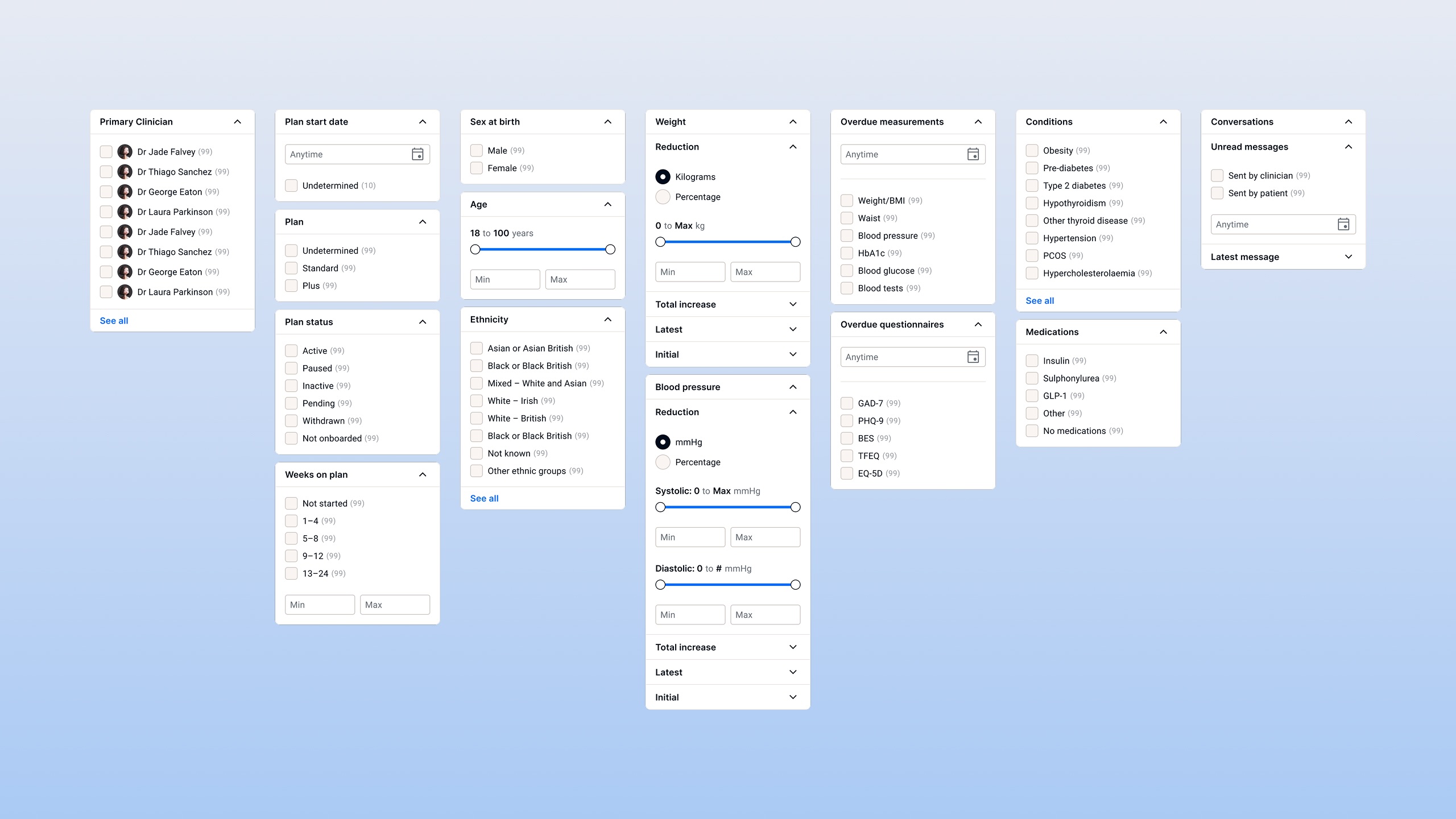
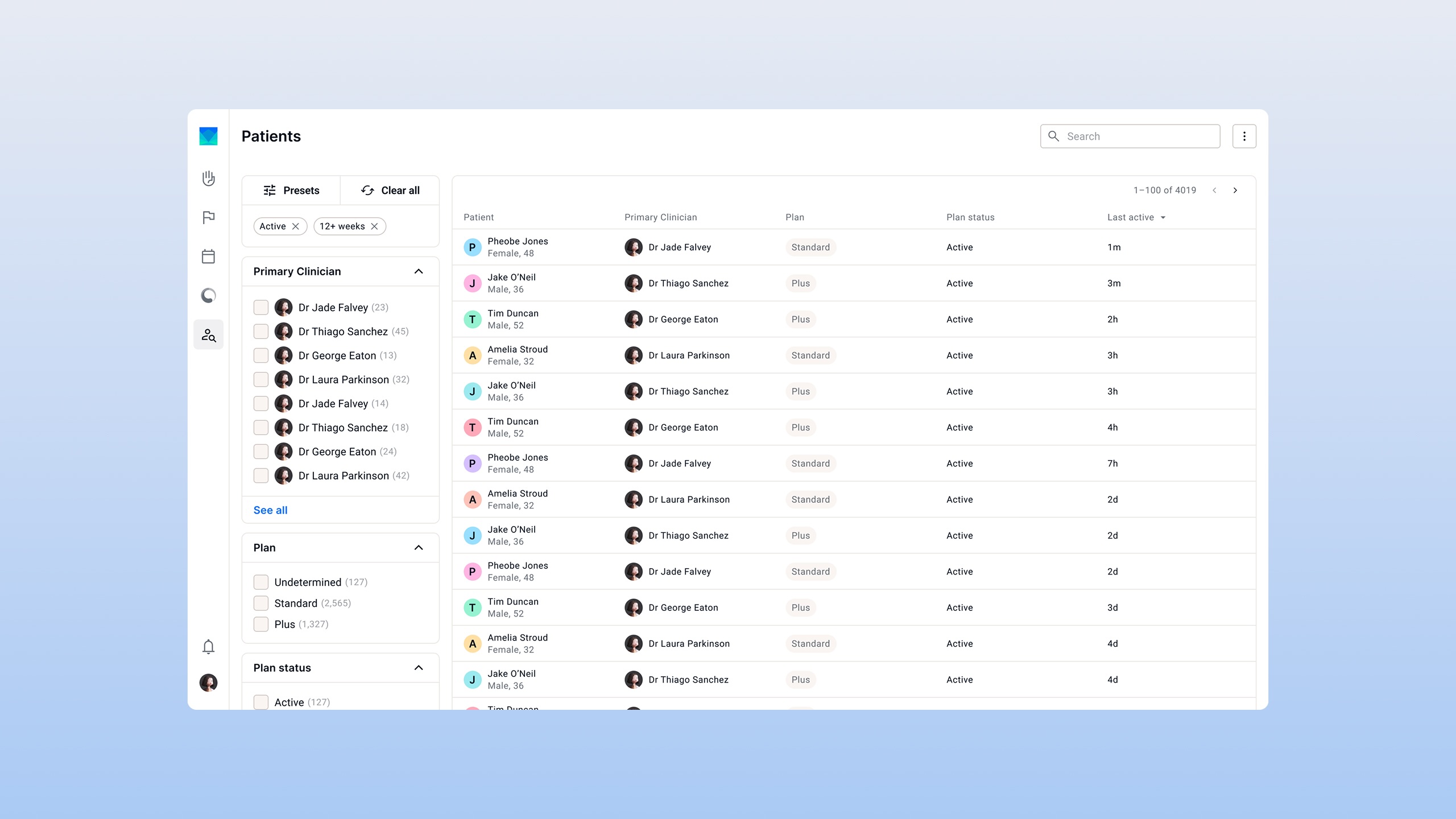
As the platform grew, tracking patient progress became a real challenge. We built a CRM-like feature within the clinic interface — enabling fast segmentation, trend forecasting and engagement monitoring.
We also introduced 'presets' to help teams make bulk actions in just a couple of clicks.